
What to look for in an address data solution: Address data needs



If data is the lifeblood of your business, addresses are the veins that carry it. They connect every operation—from shipping to customer service to compliance.
Yet, address data is often overlooked until it breaks something expensive.
This post kicks off our five-part series, What to look for in an address data solution—a practical guide to building a smarter, cleaner, and more reliable address data strategy.
We’ll break down why address accuracy matters, what capabilities your tools should have, how to evaluate providers, and how to keep your data compliant and high-performing over time.
Whether you’re in healthcare, insurance, finance, ecommerce, telecommunications, logistics, or something else, this series will help you make a savvy solution choice that the rest of your team will appreciate.
And now, without further ado, let’s get into address data needs that should be considered when you’re looking for an address data solution.
General questions to ask before choosing an address data partner
Identify your needs before beginning the search for an address data solution or partner to avoid overpaying, underachieving, and purchasing the wrong product. These questions will help you refine what you need into a simplified checklist that you can hand to prospective partners before swiping right.
- Do you need to clean up addresses already in your database?
Most companies do. Choose a provider that can handle bulk address validation and standardization to clean existing data. - Do you need to prevent bad data from entering in the first place?
Validation at entry is just as crucial as bulk cleaning. You need autocomplete APIs that seamlessly integrate with your online forms to predict and populate valid address fields as users type—stopping errors before they ever reach your system. - Do you need rooftop-accurate geocodes?
If precision matters for logistics, insurance, or mapping, make sure your provider delivers true rooftop accuracy. Many claim it, but only map to parcel centers. Find a provider that offers true rooftop or parcel-level accuracy if that’s what you need for precision. - Do you need more than just an address?
Addresses can tell you more than where someone delivers mail. Look for solutions that enrich addresses with metadata, such as RDI (Residential Delivery Indicator), county FIPS Codes, US Census data, and even property attributes like structure elevation or roof material. - Do you work with international data?
If you operate globally, your solution should validate addresses beyond the U.S. borders. Save your team from manually decoding global formatting standards… please. - Do you need integration flexibility?
Address data doesn’t live in isolation. It needs to connect with CRMs, analytics tools, and business systems. Look for persistent, unique identifiers (PUIDs), which make linking and syncing address records across datasets simple—even when street names or ZIP Codes change. - Do you need location-aware autocomplete?
If form friction is slowing down users, go with a solution that suggests only valid addresses based on user proximity. Find autocomplete tools that use geolocation to prioritize local, relevant results and improve user experience. - Do you value transparent pricing?
Reliable providers are upfront about costs. If you have to dig through sales calls just to get a quote, that’s a red flag. Find a public, straightforward pricing model that’s designed to scale as you do—no guesswork, no surprises, no sweat.
Bonus: Infrastructure independence
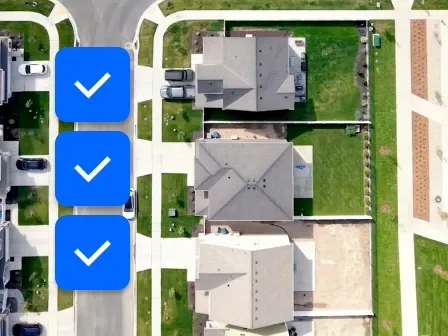
Smarty’s tools check all of these boxes and more. Our infrastructure is provider-agnostic. That means even if a major cloud service goes down, Smarty keeps running—unlike many competitors who rely on a single cloud vendor. That’s how you achieve true resilience.
Key takeaway
Choose an address provider that prioritizes reliability, accuracy, scalability, and security, who is also trustworthy, fast, and an expert in the field. If they can’t guarantee uptime, speed, precision, and data integrity, your address data strategy is standing on shaky ground.